

The seminar will examine how Philippine courts can apply international law in domestic cases, and whether international law can prevail over conflicting Philippine legislation.
Domestic courts, private parties, and the enforcement of international law: The Philippine context
Legal scholars have identified the preconditions for a domestic court to enforce international law, but there has been no research on how these preconditions apply in the Philippine context. To fill the gap in the research, the lecture will examine the following three questions using the doctrinal method: (1) whether international law will be considered Philippine domestic law and applicable to the case; (2) whether private parties have the ability under Philippine law to invoke rights under international law; and (3) whether international law will be applied despite contrary provisions of Philippine domestic law.
The analysis will focus on the doctrine in Macalintal v. Commission on Elections (2023), where the Philippine Supreme Court considered the International Covenant on Civil and Political Rights (ICCPR) and customary international law reflected in the Universal Declaration of Human Rights (UDHR) to be Philippine law. The Court then recognized a private party’s right to suffrage under these international rules in order to invalidate an election statute enacted by the Philippine Congress. Subsequently, the analysis will also cover two potential scenarios: first, a domestic suit to enforce an investor’s rights under the ASEAN Comprehensive Investment Agreement; and second, a judicial action by fishermen asserting their traditional fishing rights under the UNCLOS.
As the seminar will show, the domestic judicial application of international law will allow private parties to assert their international rights without need of first securing the approval of their state, create a domestic mechanism for ensuring a state’s compliance with its international obligations, and potentially facilitate the evolution of an international order where humans and communities are empowered to enforce, and help shape, an international law that binds and benefits them. The aspiration to evolve a more humane and sustainable international order is expressly stated by ASEAN states, and also generally shared by peoples worldwide. To help realize this aspiration, the analysis of a private party’s legal ability to enforce international law through domestic courts can be applied to other ASEAN states, and thereafter to states outside ASEAN.
The ANU Philippines Institute Research Seminar Series is a recurring seminar series that showcases the work of scholars working on political, social and cultural issues in the Philippines and the wider region, with the goal of encouraging greater exchange, collaboration and networking amongst the research community.
If you require accessibility accommodations or a visitor Personal Emergency Evacuation plan please contact the event organiser.
PHOTO CREDIT: Mike Gonzalez (TheCoffee), CC BY-SA 3.0 <https://creativecommons.org/licenses/by-sa/3.0>, via Wikimedia Commons
Event Speakers
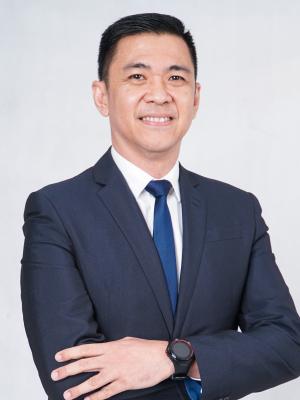
Andre C. Palacios
Andre “Raj” is Assistant Professor and former Associate Dean at the University of the Philippines College of Law, where he teaches international and ASEAN law. He also serves as Executive Director of the ASEAN Law Institute and has held senior roles in the Philippine government, World Bank, WTO and private sector.