Navigating the South China Sea: regional power perspectives in an era of rising Sino-American rivalry
Google Earth
Author(s)/Editor(s): Beverley Loke, Brendan Taylor and William Tow (ANU)
Publication year: 2026
Publication type: Policy Brief
EXECUTIVE SUMMARY:
This policy brief summarises findings from a trilateral crisis simulation involving emerging leaders from Australia, the Philippines and Singapore that was designed to stress-test policymaking under pressure in a South China Sea contingency. The simulation revealed under-recognised convergence among the three partners, but also a dangerous early “time lag” before shared interests were identified and translated into coordinated action. Building on these findings, the brief provides three policy recommendations: first, broadening regionally anchored minilateral pathways that can function even when US engagement is variable; second, institutionalising repeatable crisis simulations to build habits of cooperation among next-generation practitioners; and third, strengthening existing minilateral processes - especially the SQUAD, an informal minilateral security grouping formed by the United States, Japan, Australia, and the Philippines - through a tightly defined pillar on escalation management and crisis stability in the South China Sea.
INTRODUCTION:
In an era of seemingly endless global shocks and perturbations, it is easy to lose sight of the fact that the South China Sea still remains one of the world’s most plausible theatres for a sudden and dangerous crisis. The risk of it doing so is heightened not by dramatic, unambiguous acts of war such as Russia’s full-scale invasion of Ukraine, but by sustained “grey zone” pressure that sits just below conventional military thresholds while steadily increasing the chance of miscalculation. The past year has offered a fresh reminder. The Asia Maritime Transparency Initiative’s recent finding that Chinese maritime militia averaged 241 vessels per day in these waters in 2025 points to the sheer scale and routinisation of coercive presence. At the same time, the deepening operational tempo between the US and its allies has raised the density of maritime activity in the same contested waters. Indeed, Australia, the Philippines and the US recently undertook a “multilateral maritime cooperation activity” in the South China Sea, reinforcing a larger trend toward more frequent combined operations and signalling. That activity followed a tense latter part of 2025, marked by an unsafe aerial intercept by a Chinese fighter jet of an Australian P-8A aircraft, and repeated confrontations between Chinese and Philippine vessels including the use of water cannons and ramming incidents. In short, the South China Sea has become an environment in which coercion is persistent, forces are in close proximity, and political leaders potentially face compressed decision timelines amid intense domestic scrutiny.
These developments have contributed toward an accelerating security convergence between Australia and the Philippines, both in general terms and specifically in relation to the South China Sea. While the Philippines is an active claimant, both countries are maritime states with closely linked sea lines of communication and proximate interests in the stability of Southeast Asia. Both are also close US allies who are navigating the rise in Sino-American strategic competition. The fact that Australia’s largest overseas military activity in 2025 - Exercise Alon - was held in the Philippines is emblematic of this convergence. As Euan Graham, who attended the exercise, observes, “In the eyes of senior Philippines defence officials, Alon functioned as an effective rehearsal for joint response in case of a serious act of aggression by China.” That framing is significant. It suggests that Australian-Philippine cooperation is increasingly viewed not merely as symbolic reassurance, but as a form of contingency preparation.
The strategic logic for this cooperation has sharpened further because of growing uncertainty about the US under President Donald J. Trump. While the US remains a central strategic actor in the Indo-Pacific, the second Trump administration has reinforced a message that allies must bear greater responsibility and that US attention may be uneven. Recent US policy documents, such as the November 2025 National Security Strategy and the January 2026 National Defense Strategy have underscored expectations of alliance burden-sharing and of partners taking greater responsibility in their respective regions. Meanwhile, American domestic politics continue to create the possibility of international crises being distorted by partisan dynamics, leadership incentives, and competing priorities.
For Australia and the Philippines, the key implication is not that their respective alliances with the US are now irrelevant or obsolete, but that alliance reliance should be complemented by more practised habits of cooperation among security partners, and a wider range of credible options for managing coercion below the threshold of war. Added to this, leaders have called for a greater willingness on the part of middle powers to step up in a world where the supply of strategic leadership is increasingly thin. In a September 2025 address to the UN General Assembly, for example, Australian Prime Minister Anthony Albanese argued that middle powers must help carry the weight of international order, a case that was similarly made by Philippines President Ferdinand Marcos Jr. in his keynote address to the March 2024 ASEAN-Australia summit, where he referred specifically to the importance of “building resilience…through reinforced habits of cooperation amongst like-minded partners in specific areas.”
BACKGROUND: KEY DEFENCE AND SECURITY AGREEMENTS:
The "Squad", arguably the most prominent and promising mechanism for security involving Australia and the Philippines at present, was founded in June 2023 by the US Secretary of Defense and his Japanese, Australian and Filipino counterparts. Its purpose is to enhance security cooperation and maritime security in the Indo-Pacific region by strengthening defence and maritime security cooperation in response to growing Chinese maritime power and assertiveness in waters understood to be part of the Philippines’ territory. The ‘S’ in the SQUAD is shorthand for “strategic” which differentiates it from the QUAD or Quadrilateral Security Dialogue’ (with India, Australia, Japan and the United States as members) which promotes a broader agenda concentrating on economic and diplomatic cooperation and region-wide (Indo-Pacific) maritime security.
The Philippines is also a member of several bilateral and multilateral security agreements. The bilateral US-Philippines Mutual Defence Treaty (founded in 1951) has traditionally functioned as the lynchpin of Filipino security cooperation. In more recent years, this has been supplemented by the US-Philippines Visiting Forces Agreement (1999) allowing for US troops to operate on Philippines territory for joint exercises, the US-Philippines Enhanced Defence Cooperation Agreement (2014) permitting US forces rotational access to selected Philippines military bases and the Bilateral Defence Guidelines (2023) directed toward cooperation in cyber defence and space. Other bilateral defence accords include the Australia-Philippines Status of Forces Agreement (2012), allowing an intermittent Australian force presence on Philippines soil for joint exercises or for assistance in national emergencies; the Australian Philippines Strategic Partnership (2023) to coordinate defence planning and maritime exercises; the Philippines-Japan Reciprocal Access Agreement (2024) facilitating joint Philippines- Japanese force deployment for joint military training and drills; and the Philippines-Japan Acquisition and Cross-Servicing Agreement (2026) which allows for tax-free provision of ammunition, fuel, food and other necessities when their forces stage joint training. The Philippines and New Zealand also have forged a Status of Forces Agreement (2024) and Mutual Logistics Force Agreement (2024).
Other minilateral and multilateral security collaborations with Philippines affiliation include the ASEAN Defence Ministers Meeting (ADDM) which also entails security dialogues with eight dialogue partners including China and the United States and the Trilateral Cooperative Arrangement (TCA) with Malaysia and Indonesia to carry out joint sea and air patrols to combat piracy and terrorism in the Sulu-Celebes Seas. The Japan-Philippines-United States (JAPHUS) trilateral grouping emanated from a trilateral summit held in Washington during April 2024. It focuses on accelerating American and Japanese assistance to the Philippines in establishing more reliable supply chains of critical minerals, strengthening semiconductor technology and infrastructure development intended to link the port of Subic near Metro Manila to the southern province of Batangas – as a ‘Luzon Economic Corridor’ economic security and commercial hub. Indonesia, Vietnam and the Philippines are building a trilateral network of their national coast guards teaming up to safeguard the three nations’ individual and, at various junctures, overlapping economic zones in the North Natuna Sea.
All of these additional networks, however, fall short of providing the levels of concentrated emphasis on joint command management and tasking, force interoperability and geopolitical focus on deterrence and containment in the South China Sea against rising Chinese power and assertiveness. While the SQUAD’s evolution into a pro forma, NATO-style military alliance is unlikely, it does have tangible and critical security benefits at a time when the Indo-Pacific and global orders are undergoing significant change. By focusing on military missions featuring maritime capabilities, it naturally attracts the sustained involvement of the United States – a historically dominant maritime actor – in preserving its access to key regional littorals and sea lanes of communication (SLOCs). It also augments postwar American regional allies’ capabilities to forge a ‘latticework’ of increasingly self-reliant security cooperation which realizes Washington’s long-standing desire for those allies to engage in greater defence burden-sharing. This, in turn, encourages the United States to remain engaged strategically, diplomatically and economically in the Indo-Pacific’s ‘first island chain’ surrounding the Asian mainland. Moreover, the SQUAD’s tactical orientation allows for a rapid and collective response to hostile powers’ territorial encroachments against Philippines and potentially other ASEAN states’ sovereign domains as defined by international law.
THE SIMULATION: THE OFFSHORE ISLANDS CRISIS OF 2027:
Against this backdrop, a trilateral crisis simulation was conducted to test how next-generation analysts and practitioners from regional powers Australia, the Philippines and Singapore might respond to a South China Sea crisis and how they believed their respective countries can shape the evolving regional landscape amid intensifying Sino-American rivalry. Its central purpose was to move beyond official talking points and to capture the instincts, assumptions, and preferences of emerging leaders likely to influence policy debates and decisions over the coming decades. While the primary focus was Australia-Philippines security cooperation, a Singapore cohort was incorporated to reflect the Lion City’s significance as a regional stakeholder and, in the simulation design, the demands placed on Association of Southeast Asian Nations (ASEAN) leadership during crises.
The simulation was run virtually as a day-long exercise. Participants were based in their home countries, with 9 from the Philippines, 7 from Australia, and 7 from Singapore. Most participants currently hold junior academic appointments, although the cohort also included serving government and military officials, as well as a small number of postgraduate students. The gender split across the cohort was 50 percent male, 50 percent female. Due to the participation of serving officials, the simulation was conducted under Chatham House rules. Each group played the role of its respective government during a rapidly evolving South China Sea crisis.
This design enabled a structured comparison of how different national teams interpreted the same information, prioritised objectives, assessed the intentions of other actors, and made concrete policy choices under time pressure. The simulation employed “matrix wargaming”, a respected methodology used regularly by strategic and defence policy professionals. It is particularly well-suited to eliciting policy perceptions because it forces participants to make sequential decisions, justifying those decisions in a dynamic setting, and confronting the second and third-order consequences of these. To ensure a common baseline of knowledge, participants began with an expert briefing on the South China Sea disputes and received a comprehensive briefing pack in advance. The simulation was structured around three moves, widely considered a manageable format for a one-day exercise while still allowing sufficient escalation and complexity to test assumptions and responses.
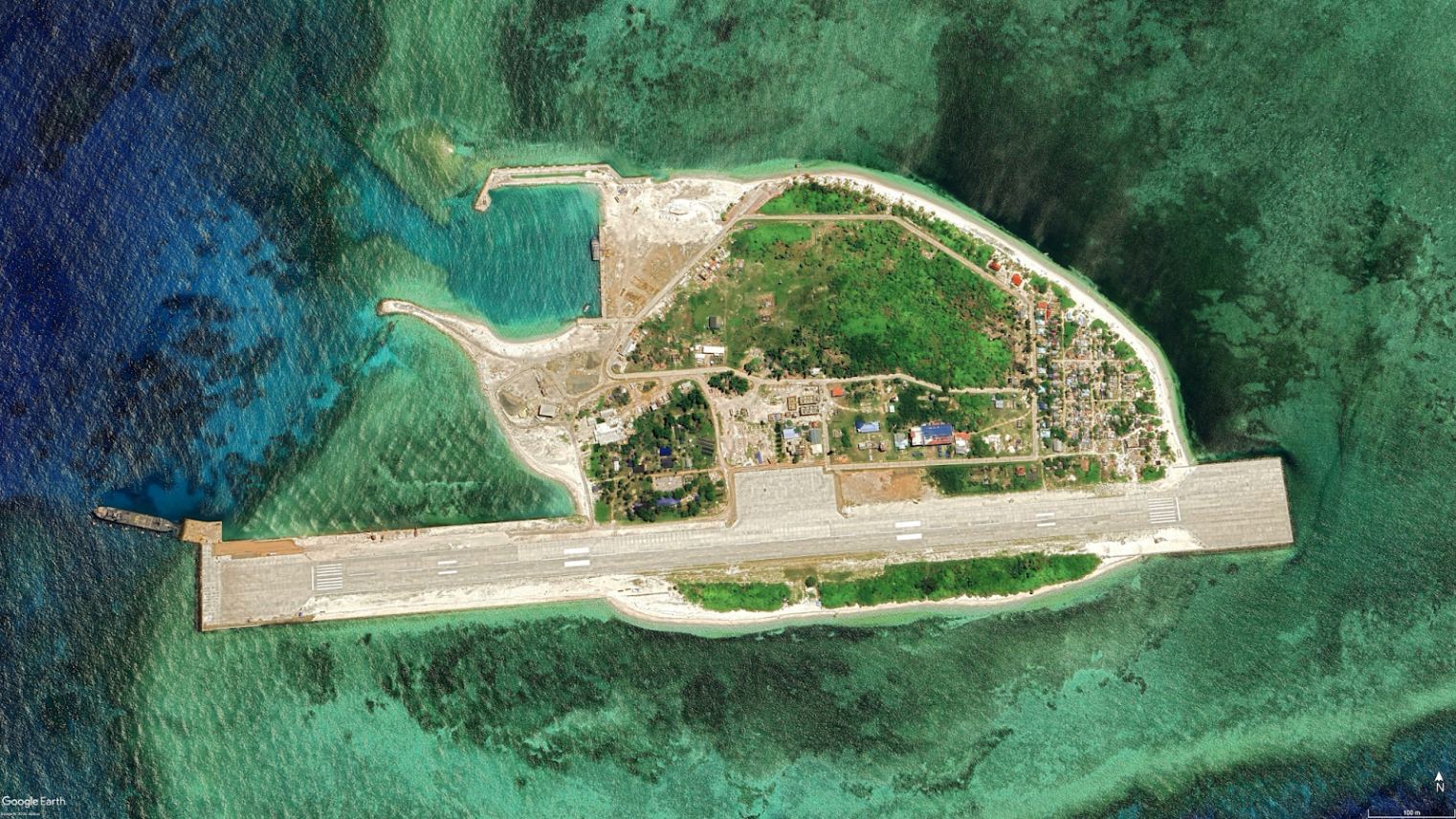
The scenario centred on the Pratas Islands, which are a set of disputed features in the South China Sea occupied by Taiwan. While not a replication of a single historical episode, the scenario was designed to be realistic and analytically grounded, drawing inspiration from scholarship on the Taiwan Strait crises of 1954-55 and 1958. It was set hypothetically in late 2027, at a time when Australia, the Philippines, Japan and the US were conducting annual SQUAD military exercises in the South China Sea, while Singapore was serving as ASEAN Chair. These contextual features were included deliberately to reflect real-world pressures that shape crisis behaviour: the presence of military forces in proximity to contested features; the dilemmas of signalling resolve without uncontrolled escalation; and the constraints and opportunities that ASEAN leadership can create in moments of acute major power rivalry.
SIMULATION PROPER:
The simulation began with Chinese maritime militia vessels, accompanied by Chinese Coast Guard ships, establishing a de facto blockade around the main Pratas Island. This initial move was designed to probe how next-generation participants assess grey zone coercion below the threshold of overt armed conflict, including questions of attribution, signalling and proportional response. In the second move, the PRC increased the intensity of its blockade by involving military ships and aircraft, raising the stakes and compressing decision timeframes. Participants also received a report that an Australian national was present on Pratas Island on a scientific exchange. They were advised that those on the island were in good health, but that food and energy supplies were finite. Additional political context was introduced to reflect realistic constraints on crisis coordination, including a divided ASEAN, and an American political situation in which the outgoing Trump administration was experiencing low approval ratings. Participants were informed that the Philippines was engaging in quiet shuttle diplomacy, while Singapore, as ASEAN Chair, faced the difficult challenge of holding a fractured regional organisation together under external pressure.
The crisis deepened further in the third move. Participants were advised that food and fuel supplies on Pratas Island would expire in approximately 72 hours, leaving around 500 Taiwanese military personnel, coast guard officers and civilian researchers without food or fresh water once desalination plants ceased functioning. This created a humanitarian deadline that forced participants to confront the intersection of strategic competition and human security pressures, as well as the reputational costs associated with inaction. The scenario also intensified the domestic political dimension by revealing that the Australian citizen on the island was the daughter of a former Australian cricket captain and beloved national sporting figure. This element was designed to test how quickly domestic factors can alter risk tolerance, reshape public expectations and narrow the range of politically viable options. At this point, pressure increased substantially on the Philippines given its concerns that similar coercion could be exerted against other South China Sea features such as those in the Spratly Islands, and on Singapore in its role as ASEAN Chair, as divergent threat perceptions and competing regional expectations became harder to reconcile.
FINDINGS:
Several findings emerged from the simulation that have direct policy implications. The first is that meaningful convergence can emerge among Australia, the Philippines and Singapore under pressure, but that recognition of shared interest may not be immediate. A striking feature of the simulation was how long it took for participants, despite ultimately converging in important ways, to appreciate the degree of common cause across cohorts. The virtual nature of the exercise might potentially have contributed toward this dynamic. Nonetheless, in a real crisis, time lag matters. The early phases of a crisis are often when misperception hardens, political narratives take hold, and escalation pathways become more difficult to control. The simulation suggested that even among broadly aligned partners, cooperative reflexes cannot be assumed. Rather, they must be built and practised.
A second finding is that grey zone coercion creates potential traps for decision makers. The opening blockade by maritime militia and coast guard vessels confronted participants with a range of dilemmas. How to attribute intent? How to respond proportionately? How to avoid looking passive while also avoiding actions that could trigger rapid escalation? Participants were repeatedly forced to weigh the value of crisis signalling against the risk of miscalculation in a congested maritime environment. The broader implication here is that South China Sea crises will not necessarily present clear legal and political thresholds. Instead, these will often be deliberately ambiguous, designed to split coalitions and complicate decision-making.
A third finding concerns ASEAN and regional diplomacy. Singapore’s role in the simulation highlighted that ASEAN leadership entails both constraints and opportunities. Fractures within ASEAN can slow collective action and complicate messaging, but ASEAN also offers convening power and regional legitimacy. In moments of acute rivalry, the capacity to keep diplomacy moving through ASEAN channels proved to be critical to preventing the crisis from being framed purely as a bilateral showdown between great powers. The simulation underscored the practical value of having regional actors able to convene, communicate and sustain a process even when consensus is challenging.
A fourth finding is the speed with which domestic politics can condition crisis management. The introduction of a high-profile Australian citizen, linked to a beloved sporting figure, altered the political atmosphere rapidly. Participants confronted the reality that domestic pressure can narrow choices, accelerate timelines, and shift the balance between risk and restraint. This is, of course, not unique to Australia. The simulation also pointed to the domestic sensitivities the Philippines would face if coercion at Pratas was seen as a template for coercion elsewhere, and to the reputational risks Singapore would face if ASEAN appeared paralysed under stress. The broader implication is that crisis management capacity is not only about military posturing, but also about the ability to communicate clearly and credibly with domestic audiences while preserving strategic room for manoeuvre.
POLICY RECOMMENDATIONS:
The following three policy recommendation emerged during the concluding “wash up” session with simulation participants:
ACTIVELY EXPLORE REGIONAL MINILATERAL CONFIGURATIONS WITH LIKE-MINDED
PARTNERS BEYOND THE US WHILE SUSTAINING SQUAD RELATIONS
- First, Australia and the Philippines should more actively explore regional minilateral configurations with like-minded partners that do not necessarily include the United States, while continuing to sustain and strengthen US-centric forms of cooperation, especially the SQUAD. The simulation suggested that, in a high-pressure crisis, Australia, the Philippines and Singapore can find meaningful common cause and exert a degree of influence when acting in concert - Australia and the Philippines as close US allies and increasingly intimate security partners in their own right, and the Philippines and Singapore as leading ASEAN actors (including through their ASEAN chair roles in 2026 and 2027 respectively). This policy recommendation is all the more timely at a moment when multilateral groupings are under strain and when prominent leaders have explicitly called on middle powers to work more closely together to help fill widening gaps in global and regional leadership. The value of more regionally anchored minilateralism is not that it replaces the US alliance system, but that it reduces over-dependence on any single external variable in moments of acute crisis, widens the menu of viable responses below the threshold of war, and provides additional channels for signalling, de-escalation, and coordinated diplomatic positioning when US domestic politics potentially complicates rapid collective action.
INVEST IN COOPERATION USING CRISIS SIMULATIONS
- Second, Australia and the Philippines should invest directly in deepening habits of cooperation among the next generation of practitioners, using crisis simulations as a repeatable, applied policy tool rather than as one-off events. One of the most striking findings from the simulation was how long it took for participants - despite ultimately converging in important ways - to recognise the degree of shared interest across the three country cohorts. To address this, the project recommends that the Australian Government support a three-year initiative involving three simulations (one each year), hosted sequentially in Manila, Singapore, and Canberra, designed specifically to build habits of cooperation among emerging leaders. Over time, the goal of such an initiative would be to build a sustainable trilateral community of practice, personal networks, common vocabulary, and shared operating assumptions that can shorten the convergence curve in a real crisis and provide governments with a deeper pool of practitioners comfortable working across national lines under pressure.
AU-PH-SQUAD COOPERATION ON PILLAR OF ESCALATION MANAGEMENT
AND CRISIS STABILITY
- Third, Australia should work with the Philippines and other SQUAD partners to add a new, tightly defined pillar on escalation management and crisis stability in the South China Sea. The project findings underscore that, as great power strategic rivalry and the risk of conflict intensifies, the next phase of minilateral cooperation should focus less on adding issue areas such as public goods provision and more on strengthening partners’ capacity to manage coercion, misperception, and escalation during fast-moving crises. One practical way to operationalise this pillar would be to pair the SQUAD’s operational activity with a modest, but targeted crisis management program consisting of common incident management protocols, regular scenario-based tabletop exercises involving civilian and uniformed officials, and professional education for key agencies on escalation dynamics. A focused element of this training could include nuclear risk reduction literacy, not because the South China Sea is necessarily “going nuclear,” but because great power nuclear forces shape behaviour under stress and raise the costs of miscalculation. Australia and the Philippines already have experience cooperating on risk reduction through mechanisms such as the ASEAN Regional Forum (ARF), and both have a shared interest in preserving Southeast Asia’s non-nuclear norms as nuclear weapons regain prominence in international politics. Framed in these terms, incorporating nuclear risk reduction literacy into a broader escalation management pillar would not represent “mission creep,” but a disciplined effort to strengthen crisis management where escalation risks are highest.
Taken together, these three recommendations are intended to build more resilient regional capacity for coordination in crises by diversifying viable cooperation formats among regional powers, investing in the next generation of policymakers so convergence happens faster and more reliably under pressure, and strengthening the strategic content of existing minilateral cooperation through a tightly defined focus on South China Sea escalation management and maritime crisis stability. Each proposal is intended to expand the range of credible options available to Australia and the Philippines in a more contested regional order without drifting into unfocused agenda expansion that would risk diluting strategic purpose.